Head office: 1Ya, Vyhovskoho st., office 37, Irpin, Ukraine
 Mon-Fri: 08:30-18:30


 office@tadgroup.com.ua
Choosing used special equipment is always a balance between price, condition, and performance. However, one key factor that buyers often overlook is the engine type. It directly impacts fuel consumption, maintenance costs, repairability, and even the machine’s lifespan. Let’s explore why the engine deserves special attention and how its choice affects subsequent costs.
Main types of engines in special equipment
Modern special equipment is equipped with three main types of engines:
- diesel – the most common in construction and agriculture;
- gasoline – found in light and warehouse equipment;
- Electric and hybrid vehicles are increasingly used in urban and logistics infrastructure.
Each type has its own advantages and limitations, which determine the cost-effectiveness of operation and the frequency of maintenance.
Diesel engine: reliability and efficiency
The diesel engine is traditionally considered the most durable. It delivers high torque, is fuel-efficient, and can handle heavy loads. However, it’s important to consider:
- increased requirements for fuel quality and filtration;
- the need for regular cleaning of the injection system and replacement of filters;
- More expensive maintenance of turbochargers and injectors.
In addition, depending on the country of origin, equipment may have complex exhaust cleaning systems (DPF, SCR), which increases maintenance costs if not used correctly.
Gasoline engine: simpler, but less efficient
Gasoline engines are found in compact loaders and mini tractors. Their advantages include low noise levels, easy starting, and minimal vibration. However, they also have some disadvantages:
- higher fuel consumption;
- less durability under intensive use;
- More frequent replacement of spark plugs, belts and oil is required.
This option is justified if the equipment is used intermittently or in closed spaces where it is important to minimize smoke and noise.
Electric and hybrid solutions: the trend of the future
With increasing environmental requirements, electric motors are becoming increasingly popular. They require no oil, filters, or fuel, and maintenance is limited to checking the batteries and electrical circuits. However, when purchasing used electric equipment, it’s important to consider:
- residual capacity of batteries;
- status of controllers and inverters;
- availability of original spare parts and manufacturer’s warranties.
Repairs to electric vehicles can be more expensive than to diesel vehicles due to the limited number of service centers and the high cost of components.
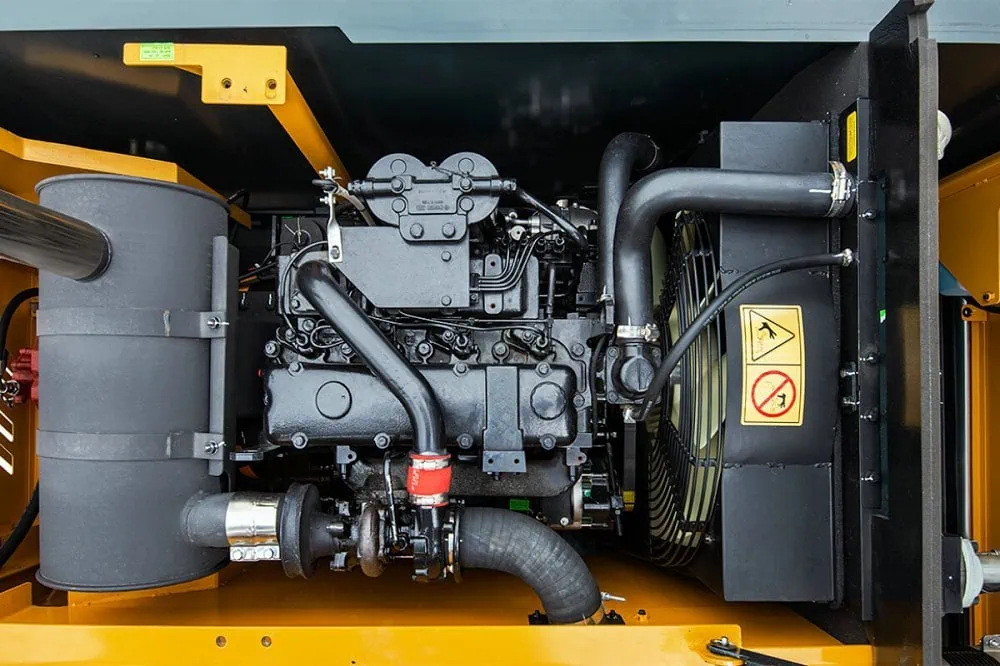
How engine type affects future maintenance
The engine type determines not only operating costs but also maintenance logistics.
For example:
- diesel vehicles require scheduled maintenance every 250–500 engine hours;
- gasoline – more often, every 150–250 engine hours;
- Electric machines – minimal but specialized maintenance.
Spare parts availability is also important to consider . Engines from well-known brands (Perkins, Deutz, Cummins, Yanmar) ensure easy repair and predictable costs, while rare models can create supply chain issues.
Mistakes when choosing an engine
Buyers often rely solely on the price of equipment, without considering the cost of subsequent maintenance. Common mistakes include:
- selection of an imported model with a non-standard engine that meets European standards;
- ignoring the operating hours;
- underestimation of costs for filters and fluids;
- purchasing equipment of unknown origin or engine tampering.
Each of these factors can turn savings made during the purchase into costly repairs within just a few months.
Practical recommendations
Before purchasing special equipment, it is important:
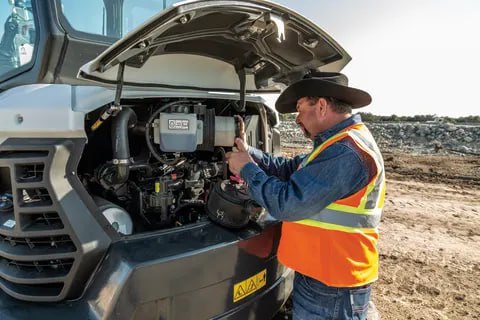
- Check engine compression and exhaust.
- Compare the cost of basic consumables by engine type.
- Study the service history and notes on repairs performed.
- Determine the expected load and operating conditions.
This approach will allow you to objectively assess the machine’s service life and predict future costs.
A reliable choice with expert support
If you want to avoid hidden problems and select equipment with the optimal engine for your needs, contact TAD Group . We offer proven used equipment, inspected and prepared for operation. We help you choose a model based on engine type, service life, and fuel efficiency, ensuring each unit provides long-lasting service without any surprises.